A dusty paperback novel conjures up the heyday of late night talk jocks
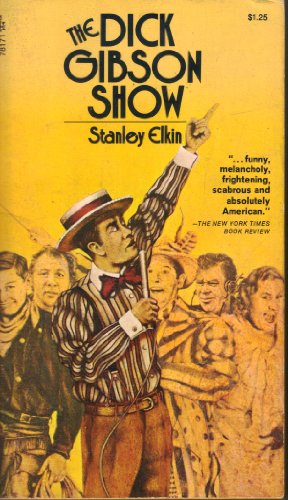
My stack of library books depleted, I recently combed our overflowing shelves for something to read during these long housebound days. A dusty paperback from 1972 caught my eye: The Dick Gibson Show by Stanley Elkin. The author was a well-regarded dispenser of serious literary fiction in the era of John Updike and Saul Bellow. In the 21st Century, that translates as another long-winded white guy — guilty as charged.
Nevertheless Dick Gibson hooked me after a few pages, and held on right up to the end. Short on plot, this story of an itinerant DJ in post-World War II America is discursive on purpose. The Dick Gibson Show goes long and deep on dialogue, monologue, spiel, invective, improbable yarn-spinning and tall tale telling. It’s a operatic deluge of bullshit, a hymn to the human voice and its hypnotic prowess. Of course there are premonitions of the Internet in this cavalcade of craziness: the opinions, fantasies and delusions of radio hosts and listeners alike, broadcast far and wide from mighty mega-watt towers.
But Dick Gibson (“alias Marshall Maine, Tex Elllery and a dozen others”) is more curio than oracle. The Dick Gibson Show is a remnant, a reminder if you’re old enough, of a transitional period in mass media. When the Fairness Doctrine was rescinded in 1987, the talk radio format transformed into the pointedly political, and mostly conservative platform of Rush Limbaugh and disciples. Before that upheaval, however, the AM dial was a twisty two-way street, an on-air phone conversation between quirky hosts and even stranger callers. Late at night, especially, you could almost say anything. Or nothing.
A digital clock radio was my bedside companion through adolescence. Exclusively tuned to FM in the Seventies, it functioned as a supplementary music-delivery system until I moved to New York City in 1981. Exactly how or why I first pushed the AM button is a mystery; perhaps as I became a music writer, spending my days reviewing records and preparing for interviews, talk radio presented an alternative — an escape hatch. Sure I’d watch TV before turning in; I revelled in the vintage B-movies and The Mary Tyler Moore Show reruns. But all too often, after the lights went out, my brain remained on.
Eventually, nearly inevitably, late-night talk radio lulled me to sleep. It was a perfect palliative for my frequent bouts of insomnia.
WMCA was a Top 40 beacon in New York during the Beatlemaniac Sixties, famed for its clean-cut platter-spinning DJs, The Good Guys. But by decade’s end, FM rocked the airwaves with album cuts and countercultural hosts. So in 1970, WMCA switched to an all-talk format that soon became the industry standard for AM stations around the country. Because it was the first clear station on the dial at 55, I latched onto WMCA and became a loyal listener.
It should come as no surprise that Larry King, the wooden interviewer who inexplicably became a cable TV staple in the Nineties, was first a talk radio god, widely heard in syndication, as was the earnest daytime-TV host Sally Jesse Raphael. But my main man on WMCA was local, a transplanted Southerner and political conservative named Barry Farber. Honestly, I remember little or nothing of the actual content of those nocturnal gabfests (which testifies to their efficiency as sleep aids). What sticks in my ear over the decades is the rough yet honeyed tone of Barry Farber’s voice, his mild Carolinian accent and skeptical-yet-respectful interviewing style. He didn’t argue, shout, badger or bray at his guests, and he kept callers on the leash.
In that regard, Barry Farber’s on-air shtick was a far cry from Dick Gibson’s various personas let alone Rush Limbaugh. And the roots of what talk radio became could be heard in the Eighties on WABC in New York loud and clear, every afternoon, where Bob Grant pushed the envelope with racial invective and politicized misanthropy. The fictional centerpiece of The Dick Gibson Show is a live-mic multi-guest program that devolves into a round-robin mental meltdown. If this extended scene strains credibility about what was permitted on the radio in 1971, then it surely resembles a bad day on Twitter. Minus the gun.
 Mark Coleman