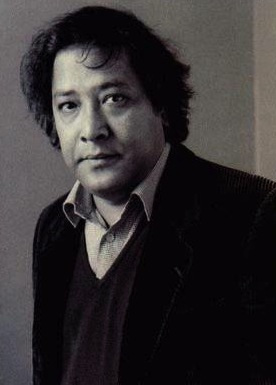
His books are long out of print, basically forgotten. And when they were current, his last name always overshadowed his first. But contemporary readers fortunate enough to spend time with Shiva Naipaul, the late younger brother of Nobel Prize-winner V.S. Naipaul, will find the former a true original, perhaps the great lost author of the 1970s. “My choice of career must seem like an exercise in masochism,” he admits in the essay “My Brother and I”:
The paradox is this: I was doing anything but following in my brother’s footsteps when I started to write. Rather, I had taken the first step on the road to independence, to the autonomy that had always been denied me.
A dozen years younger than his celebrated sibling, Shiva Naipaul travelled a remarkably similar route, progressing from childhood in Trinidad to a scholarship at Oxford and eventually, pursuit of the writer’s life in London. Adding to the confusion, the subject matter of his books is, at first glance, remarkably similar to his brother’s, even patently Naipaulian.
Two rich tragicomic novels set in his native island, Firefliesand The Chip ChipGatherers, garnered awards for Shiva Naipaul upon publication in the early ’70s—as well as inevitable comparisons to his brother’s first masterpiece A House for Mr. Biswas. For all their surface similarities to Sir Vidia’s early work, however, the younger Naipaul’s family sagas cast a more humane look upon the extended Indian immigrant clans settled in Trinidad, incorporating rounded, complete female characters and their points of view. Modern concepts of education and ambition bump up against old-world traditions in Shiva Naipaul’s Indo-Trinidadian characters, mixing and mingling in unpredictable, volatile ratios.
While her neighbors consider Baby Luchtman, the resilient heroine of Fireflies, to be “too big for she boots,” it’s her uncle, the failed patriarch turned political wanna-be Govind Khoja, who skewers himself with ludicrous ambition:
Deprived of his authority at the head of the family, he was like a fish out of water, breathing in the noxious air of rebellion and insult. Unhappily, in the years since his mother’s death, this is exactly what had happened. Thus, since he was to be debarred henceforth from playing the guru to his own family, he would be guru to the people at large. The purveyor of an incomprehensible doctrine on education could not be challenged or called to account: the masses could only listen, be mystified and obey. So at any rate, Mr. Khoja believed.
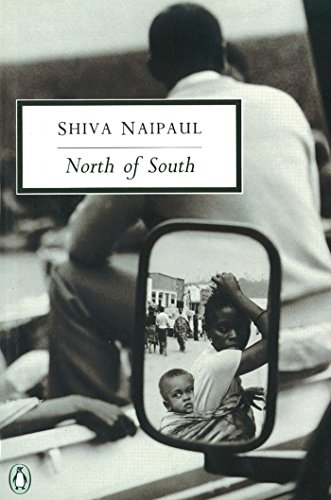
Turning to narrative nonfiction after The Chip-Chip Gatherers came out in 1973, Naipaul invited further comparisons to his brother’s work by documenting a six-month trip through Kenya, Tanzania, and Zambia in North of South: An African Journey (1978). Split between sharply observant travel writing and acidic political interpretation, North of South may work better as opinionated long-form journalism than objective history: It’s slightly anachronistic, and often problematic if judged by current standards. Once—or if—you get past his use of the word “primitive,” Naipaul expresses, and in fact demands, respect for indigenous cultures while unblinkingly documenting the complexities of postcolonial life, confronting the condescending white settlers and decrying their racism.
His next book is arguably Shiva Naipaul’s nonfiction apotheosis, and his personal Waterloo. Journey to Nowhere (titled Black and White in the U.K.) places the author in Guyana just days after the Jonestown mass suicides. Struggling to make sense of the senseless, Naipaul provides context and finally, insight into this still-inexplicable nightmare. The most recent account of the tragedy, Jeff Guinn’s The Road to Jonestown: Jim Jones and Peoples Temple (2017), is far more thoroughly researched yet nevertheless pales in comparison to Naipaul’s fitful exploration. Tracing Jim Jones’s strange trip back to his ostensibly progressive roots in the Bay Area, Naipaul indulges in a touch of cliched California-bashing before unearthing the horrible and half-hidden truth about the cult leader:
Deep racial terror was mercilessly exposed and exploited in the People’s Temple. Jones stripped bare his following and left them naked and defenseless. He did not liberate; he assaulted and traumatized those who believed in him. Once can sense at a certain level his raging hatred for the blacks whose God he claimed to be; a hatred so deep-seated, so tormenting that, it its fury, it turned itself inside out and called itself Love.
Returning to fiction with Love in a Hot Country (1983), Shiva Naipaul portrays star-crossed lives in a corrupt and ravaged Caribbean nation after The Revolution. His voice and vision are decidedly bleaker here yet no less compelling than in the previous novels. A stunning collection of essays and short stories titled Beyond the Dragon’s Mouthappeared in 1985—the same year Shiva Naipaul died suddenly of a heart attack at age 40. In the introduction to the posthumous collection An Unfinished Journey(1987), Naipaul’s father-in law Douglas Stuart recalls asking him about a return to the comic vein of his initial fiction. Naipaul replied: “How can I? I have walked over the bodies at Jonestown.” But he was far from exhausted. “Beyond The Dragon’s Mouth,” an autobiographical essay first published in 1984, relays the depth, and fortitude, of his inspiration:
I grew up in a no-man’s land. Suburban life with its ease and unrelenting worship of American standards, American ideals, had not existed when I was a boy. Its assumptions and prejudices were unfamiliar to me. If I was like a fish out of water at a Hindu rite, I was no less a fish out of water at a drive-in cinema with the vapors of hot dogs and hamburgers. Such definition as I do now posses has its roots in nothing other than personal exigency. Every day, I have to redefine myself.
In his abbreviated oeuvre, Shiva Naipaul conducts a restless search to comprehend the world at large, and himself. Whatever his further journeys, both real and imagined, might have revealed, he left us plenty to unpack.
Originally published in The Millions November 13, 2018
Originally Published In The Los Angeles Times Book Review February 24, 2008
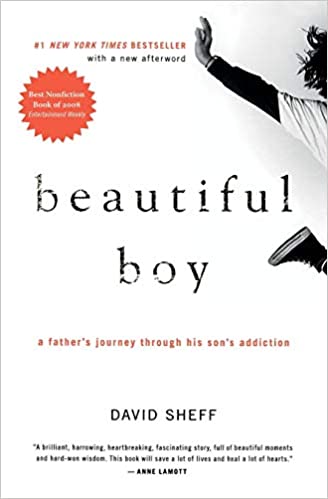
Beautiful Boy: A Father’s Journey Through His Son’s Addiction by David Sheff
Tweak: Growing Up On Methamphetamines by Nic Sheff
WHEN 18-year-old Nic Sheff fell in love for the first time, it hit him hard, the way it hammers many sensitive adolescents, a sunny infatuation quickly turning into obsession. Unfortunately, he was smitten by a drug, not a person, and this protracted affair would alienate him from his family and siphon off his humanity, he writes in “Tweak: Growing Up on Methamphetamines.” Any question of the memoir’s credibility is answered in “Beautiful Boy: A Father’s Journey Through His Son’s Addiction” by Nic’s dad, author and veteran journalist David Sheff. These simultaneously published books offer a rare mirror on a scourge that is ravaging America. But ultimately both father and son are mining their memories as an act of deeply personal therapy.
David Sheff’s book is the more effective — and affecting — narrative, rich with topical research and personal revelation. “Beautiful Boy” benefits from Sheff’s acute journalist’s eye as well as his unconditional love for a troubled son. His is not the bullying “tough love” of boot-camp reform schools but a flexible, enduring bond that nevertheless stops well short of enabling Nic’s addiction. In the end, he comes across as a good father, perhaps better than he gives himself credit for. He’s also too good a writer to ignore who or what is in front of his face. “He looks like someone who survived a famine,” Sheff writes of Nic, emerging from yet another tweaking binge. “My affection for him is tempered by my fear of him.”
Judging by the evidence offered in both books, the father was right to be scared. If, as David Sheff’s fervent and far-seeking research suggests, methamphetamine addiction is a neurotoxic crisis from which one never completely recovers, then the addict’s family, no matter how estranged or exploded, never completely recovers either. There is no happy ending here, no closure, just a harrowing sense of flat-out catastrophe and death narrowly avoided.
Known as speed or pep pills in the 1960s, methamphetamine has been around since at least World War II. By the 1990s, a more potent crystallized form of the stimulant was being brewed in homemade laboratories across America. Cheaper and longer lasting than cocaine, “crystal meth” gained a widespread — and devastating — popularity. Of the 500 law enforcement agencies that responded to the 2006 National Assn. of Counties meth epidemic survey, 87% reported an increase in meth-related arrests since 2002. The epidemic’s human cost can’t be rendered in mere statistics.
Reading Nic Sheff’s fitful diary entries in “Tweak” makes methamphetamine addiction seem less a journey than a series of detours, like being stuck in a maze. Nic’s story is devoid of mouth-watering details or ecstatic descriptions of getting high. Moving faster than the speed of life, he doesn’t spend much time exulting in the buzz. Meth propels Nic (and his drug buddies) into spirals of hyperactivity, an endless loop of mad, half-baked scheming and plotting. Any quest pursued while “tweaking” invariably ends in disarray or disaster, whether it’s taking apart your computer, breaking into your parents’ house, launching a profitable second career as a street drug dealer or all three at once. “It’s not like I enjoy being so selfish and self-absorbed,” Nic writes upon reaching yet another behavioral nadir.
One devastating effect of meth, at least on Nic, is how it instantly replaces any moral qualms or inhibitions with a mercenary sense of purpose. After a year of rehab and sticking to the 12 steps, this educated product of New York City and Northern California’s suburbs relapses, becoming an utterly remorseless thief in the time it takes to say, “Let’s get stoned.” Nic is drawn by necessity and convenience to the inner city, where drugs are easier to find, but in terms of street smarts, he’s clueless. Laughably, he supplies his credit-card number to a two-bit hustler; less comically, he moves into a seedy Oakland rooming house for a lengthy sojourn and latches onto a fellow boarder who’s also a tweaker. At one point, he earnestly asks “Gack” why he’s never considered rehab: It doesn’t occur to Nic that his new best friend has no supportive familial safety net. (Gack shares a room in the boarding house with his father, a convicted child molester.)
When the pull of his suburban haunts proves irresistible, Nic reunites with an old flame and fellow user who fuels his worst instincts. “Honestly I can’t see Lauren living in the car with me. I need her to have access to [her] house and access to her parents’ money. It’s not that I don’t care about her, I’m just trying to be realistic.”
Both father and son lay a lot of blame on David Sheff’s divorce from Nic’s mother, and David admits compensating for the split by acting more as friend than parent to Nic. “[N]ow I look back in horror,” David writes, “on the time I smoked [marijuana] with him.” Nic’s mother and father, as well as his therapists, cite precociousness and “overexposure” to his parents’ world as the root of Nic’s addictive proclivities. “If only I had protected him more from my adult life,” his father mourns. Somewhat surprisingly, both father and son also implicate pop culture. (Nic worked as a fledgling online movie critic between meth runs.) “All my heroes, Kurt Cobain, Iceberg Slim, Donald Goines, Charles Bukowski, Henry Miller, Jean-Michel Basquiat, they all lived these crazy lives,” Nic writes without a touch of irony. “Here’s a note to parents of addicted children,” David advises ruefully, “choose your music carefully.”
One is tempted to conclude that the self-lacerating father is too hard on himself while his prodigal son isn’t judgmental enough. Despite his candor about some things, Nic remains a cipher; even his flashes of insight sound recited, as if he’s trying to convince himself as well as his counselors. And when David offers the lyrics of Bob Dylan and Bruce Springsteen as summary and valediction, their familiar lines fall flat in the face of his own hard-earned wisdom. In the most literary and revealing sequence of “Beautiful Boy,” Nic sabotages a family camping trip without being physically present. This haunted, almost macabre scene captures the persistence of addiction: the way it consumes and damages innocent bystanders. By the time David realizes the personal toll his son’s drug use has taken on his own life, it’s too late. “Nic’s addiction became far more compelling than the rest of my life.”
It doesn’t give too much away to say that the conclusion of “Beautiful Boy” demonstrates the truth behind the cliche that “what doesn’t kill you makes you stronger.” And “Tweak” ends on a suitably melancholy note: A shaky, chastened Nic slowly regains some of his post-adolescent promise as a writer and his humanity, though not necessarily the trust of his nuclear family.
In the end, Nic Sheff would seem to be better off than William S. Burroughs III, the son of the pioneering Beat Generation writer. The younger Burroughs offered a vivid account of adolescent drug addiction and overexposure to adult life with his autobiographical 1970 novella, “Speed.” He rocketed through a far grittier and less forgiving bohemian scene in the late 1960s, when drug rehabilitation meant detoxifying in jail. The closest thing Billy Burroughs had to a father figure was poet Allen Ginsberg, a bemused and somewhat grudging family friend who’d usually spring for bail. “Speed” is a sad and grasping tale that ends with an extended stream-of-consciousness evocation of an amphetamine binge. It may be better writing than “Tweak” on some rarefied level, but Burroughs died a broken man in 1981. Nic Sheff has the benefit of being sober and self-aware, for now at least, not to mention having a father who cares.
Jeff Reidel was the strangest person I’ve met in NYC, then or now, and almost 40 years later I finally realize how much he taught me
78 Washington Place in the 21st Century
Moving into 78 Washington Place, during early spring 1981, didn’t take long. My possessions consisted of two suitcases, briefcase, clock radio, electric typewriter. Apartment 3C came furnished. The metal bed was fitted with a thin mattress and itchy blanket, reminding me of the bottom bunk at summer camp. (It proved to be considerably less comfortable.) There was a reasonably clean and functioning mini-refrigerator, the boxy kind found in college dormitories. The institutional-beige paint on the walls smelled like a recent upgrade. A flimsy-looking wood table and mismatched kitchen chair nudged against the wall, in a shadowy corner across from the bed. (The single window didn’t admit much sun and the overhead bulb barely helped.) A vintage hotplate sat on the table, its twin burners supporting a dented kettle and battered frying pan. The shallow closet was the size of a cupboard; next to the closet door, a chipped porcelain sink clung to the wall beneath a mirror dotted with paint drips. As advertised, the basic toilet and shower facilities were located near the stairway in the hall.
My first day began on an industrious note. I deposited the teapot and filthy frying pan in a garbage can on my way out to grab a cup of coffee. Later I took a ten-minute stroll up to West 14th Street and stumbled on a block of rock-bottom discount stores between Sixth and Fifth Avenues. There I purchased plates, a small pot and pan, a pair of place settings plus a serrated knife, two drinking glasses, a cereal/soup bowl and a large mug for coffee or tea. The whole deal me back $12 with no mention of tax.
At home I tried to draw up a grocery list, but it was hard to determine what I could actually cook on the hotplate besides an egg or can of soup. Frying bacon or a burger would no doubt trigger the lunar-shaped smoke alarm on the wall. The severe limitations of this minuscule “studio” sunk in fast. My first apartment was no more than a room. The panic switch in my stomach flipped for a few manic seconds, but I vowed to hang tight.
Just then I heard a knock on the door, followed by a voice instantly familiar from my first visit to the building.
“Mark, hi Mark? It’s Jeff, Jeff The Super, you know…oh Hi.”
“What’s up?”
I must’ve looked distracted because he blanched and hesitated, waiting a few seconds before edging his way through the open door.
“Well I heard the radio so I knew you were in here. Where did you go earlier? When I came by before, there was no answer.”
“Yeah I walked up to 14th Street and bought a couple things for the place, like some glasses and stuff. A new frying pan.”
“Wha-what was wrong with the ones here? You bought new…”
His eager green eyes opened wide in astonishment.
“Jeff, the glasses in the cupboard had spiders living in them.”
This seemed to placate him for a moment.
“You know, this apartment did sit vacant for awhile. Glen, the guy who lived here, he ah died a couple months ago.”
Here Jeff went silent for a moment, reflecting. I anticipated a memorial of sorts, some fact or anecdote about the late tenant.
“That’s why you got this nice new paint job.”
I noticed that Jeff had a plastic shopping bag in hand.
“Looks like you went to the store, too.” I nodded at his bag. This forced social encounter felt like visiting one of my elderly great aunts.
“Oh this,” he replied, hoisting it aloft. “That’s why I stopped by. Thought you’d need some toilet paper.”
Four individually wrapped jumbo rolls tumbled onto the table.
“How about some toothpaste? Do you have a toothbrush?”
Whatever illusion I had about Jeff’s visit as an altruistic get-acquainted session went straight out the window. The toilet paper was no welcome-wagon gift. This old weirdo was trying to hustle me!
“Jeff I think I’m set on toothpaste and stuff. I never thought to ask about toilet paper, though, doesn’t the building provide it?”
“Oh no,” he said with an ashen look.
“Well I can pick some up when I go to the grocery. Thought I’d try the one you told me about — Sloane’s — over on West 4th Street.”
“B-but you’ll be needing toilet paper.” Suddenly Jeff was upset, almost shaking, plainly offended by my polite demurral. So I wound up paying him $4, undoubtedly an absurd markup, mostly because I felt sorry for him. But my blinders had been removed. Or so I thought at the time.
*
How old was Jeff The Super? Somewhere between 40 and 70 was my best guess but at 23 my perception of aging was vague, unformed. Further confusing the issue was Jeff himself. He struck an elderly stance, carrying himself like a premature geezer. As time passed, I was able to spot him in a crowd because he walked at a crooked slant, unsteadily, swerving across the sidewalk like an imperfectly gripped pencil scribbling on the page. It wasn’t beneath him to accept — or disingenuously solicit — a senior citizen’s discount at an unsuspecting restaurant. And his voice sounded old. He spoke with the same halting cadence and contained sigh as my maternal grandparents, the measured Dutch-inflected accent of eastern Pennsylvania. Though he could’ve hailed from anywhere. Evasive by nature, he routinely deflected any and all of my inquiries. He’d squint and furrow his brow in mild befuddlement for a few teasing minutes, and then flash an indulgent smile at my futile questions. He was careful not to date any of his meandering anecdotes or boring stories. Essentially he was timeless, or misplaced in time like some kind of human anachronism.
Jeff was, arguably, my first friend in New York. Well, next to Frankie Crocker on WBLS-FM. Jeff wouldn’t have argued with that characterization of our relationship. I would have. Still, despite my conflicted feelings about him, from the very start I was impressed by Jeff’s resourcefulness. His not-readily-apparent means of making a living was something he didn’t try to conceal. No, he was eager to share his acumen. The superintendent job provided free rent plus a meager salary. Considering that his duties seemed to consist of collecting the rent and taking out the trash, in that order of frequency, his $25 a week looked generous from where I slept.
“There’ve been weeks when I get by on twenty-five,” he admitted. Even so, Jeff always had multiple “irons in the fire,” as he liked to put it.
Occasionally he claimed professional status as a “printing broker,” an unnecessary middleman between customers and odd-job printers. Dressed for success in his rumpled double-knit blue blazer and Sixties-era paisley tie, he’d leave the building with a spring in his step, hoping to drum up business, only to return disappointed. Since I refused his persistent offers of a custom-designed business card or resume, I can’t attest to Jeff’s abilities in this deservedly obscure field of endeavor. Apparently he didn’t know, or didn’t think I knew, about the existence of copy shops.
His main gig and true calling, his métier, was scavenging. Jeff was a garbage broker, a speculator in recyclables, a trash tout. He picked investments out of the staggering array of flotsam and jetsam just left there to rot in the city streets. He combed the urban beaches, the New York equivalent of those borderline-derelict Florida retirees who used to patrol the oceanfront, wielding their metal detectors like divining rods.
Naturally, Jeff offered to share his finds with me, asking for a nominal fee only after he’d hauled the junk up to my apartment. None of this was desired nor encouraged. Jeff would show up, plunk down a tattered lamp or rusty toaster oven and start to admire it aloud, conducting a sort of hard-sell seduction until I’d finally fork over the suggested $5 or $10 just to get rid of him. Returning all this weather-beaten house ware to the street wasn’t an option, not after his wounded inquiry the one time I tried it.
“You’re not going to believe this but I found another table fan like yours…hey wait a minute…” Eventually, the unbidden furniture and appliance deliveries wound down. There just wasn’t much room left in my room.
When I wasn’t being judgmental, Jeff struck me as poignant. Not for what I came to see as his shabby, grasping method of survival but for what his existence suggested: the possibility of growing old in the city, what it might be like after twenty, or thirty years. Spending time with Jeff, I’d get swept up by an unfamiliar surge of melancholy. What troubled me, I understand now, was the prospect of growing old alone in New York City.
*
Consulting Jeff about hot plate cookery would’ve been ridiculous. He ate all his meals in restaurants. How this squared with his frugality is a tribute to his one visionary talent. Jeff was the budget gourmet supreme, an indispensable guide to the culinary underside of downtown Manhattan. He became my guru in the matter of finding tasty, sustaining meals on the cheap. Seriously, Jeff was the first foodie I encountered.
But I avoided eating with Jeff in the East Village. The World War II era décor and cafeteria service at Katz’s Deli suited his taste to a “t”, but at $5 plus their Himalayan pastrami sandwiches were too expensive for anything besides a special treat. And his enthusiasm for global cuisine stopped at the Indian restaurant row on East 6th Street. The Ukrainian and Polish fare on offer in the East Village, on the other hand, was right up Jeff’s alley: starchy, filling and cheap. Unlike the Greek-American diners Jeff frequented, however, east side coffee shops like Kiev, Leshko’s, Veselka, and Odessa were full of people closer to my age not to mention appearance. I was never a fashion maven, frankly, so at first I found my style-conscious peers in the city more than a bit intimidating. Nevertheless after a few months in New York I began to subtly alter my look. Slim-cut black jeans (which I’d never encountered in the Midwest) actually felt more comfortable than my traditional baggy blue Levis. And after my first short-sides hair cut, there could be no return; I was humbled by the realization that my wavy blond locks looked ridiculous in a shaggy Seventies hairdo. As I began to fit in the East Village scene, or at least not stand out quite as much, I became aware of how incongruous Jeff appeared as my dining companion. We were one odd couple.
Jeff was confused and hurt by my sudden reluctance to discuss the day’s New York Times over leisurely dinners. Looking back, I’m stunned by my callow behavior — bordering on cruelty — toward the helpful if eccentric mentor who’d taken me under his wing: “showing me the ropes” of city survival, as he put it. But as my raw hunger for human company abated, or became sated in other situations, socializing with Jeff started to cramp my style.
*
“Hello? M-M-Mark? It’s me, Jeff. Your old super.” He always spoke haltingly, but this time Jeff sounded downright nervous, stuttering. It had been a solid year since I escaped the decaying 78 Washington Place.
We’d kept in touch for six months or so after I moved, though our dinner dates soon grew infrequent and increasingly strained, at least from my perspective. When I literally didn’t know anyone in New York, Jeff supplied a psychological lifeline: for all his cagey weirdness he was intelligent, and intellectually curious. Apart from reading the same newspaper, however, we had nothing in common. And as I began to make a life for myself in the city, spending time with Jeff became an irritant. After I abruptly turned down a series of near-pleading invitations, he had finally stopped calling. Until this autumn day.
“Have you h-h-heard of this play Torch Song Trilogy? It just moved to Broadway from Circle In The Square in the Village?”
“Sure I read about it the Times. Harvey Fierstein, right?”
“He’s marvelous. Well I got two tickets from the language school and I’ve already seen it so I could let you have them for $10 each. Too bad we can’t see it together.”
This was one of Jeff’s fund-raising schemes; he’d re-sell the free theatre tickets and museum passes that were intended for his English as a Second Language students. I’d always resisted his offers in the past, but a young woman I’d recently met had expressed interest in Torch Song and I had never been to a Broadway show. The price was right.
“I’m strapped for cash these days but I would like to see it. So yeah, I’ll take ’em off your hands. Hey, wait, when’s the show?”
“N-N-Next Saturday night. We…well…why don’t we meet for dinner tonight at the Courtney and I can give you the tickets there.”
“Just like old times. OK, Jeff, I’ll see you there at seven.”
“Thanks, Mark. Don’t forget the $20.”
*
It was cold for an October evening; I shivered in my denim jacket as I walked across 14th Street. Gus the counterman greeted me with a big smile when I entered Jeff’s favorite coffee shop. I still ate at the Courtney frequently though I was careful to arrive when I calculated Jeff wouldn’t be there, usually for a late morning breakfast or early lunch. Even at the time I felt pangs of guilt about avoiding him, but running into Jeff would have been even more uncomfortable. That’s how I felt then, anyway.
I slid into the cramped booth in back and splashed milk into the scalding cup of coffee that Gus delivered seconds after I sat down. I faced the door so I could see Jeff arrive but his entrance was still a shock.
He showed up in what appeared to be a woman’s coat, a tan number with fur collar, ragged cloth, a size too small. I supposed it was warm if nothing else but he’d buttoned it unevenly so the collar hung open in a way that suggested depression, desperation, and derangement. Clearly this was an act of pragmatism — of survival — rather than a failed attempt at cross-dressing. Jeff’s discerning eye for functional cast-offs didn’t extend to clothing.
We got through dinner and made our exchange. I can’t recall what we ate or talked about; I know I didn’t say much. All I remember is how lost he looked, this bent bony stork of a man in clothes the Salvation Army or Goodwill would’ve rejected. It was like seeing him for the first time. That spring day when we met just 18 months before felt like a lifetime ago. Whatever debt I owed him was paid, I quietly decided to myself.
I never saw Jeff Riedel again.
Looking back I’m shocked by my younger self, appalled by my indifference. Jeff’s repeated attempts at hustling me out of a few bucks hardly justified my harsh assessment — and dismissal — of our relationship. Though it’s no excuse, perhaps the wear and tear of baseline city living coarsened my sensibility, eroded my sense of empathy. Apparently my attitude toward Jeff curdled into: you use me? I’ll use you. Eventually I learned this is not a pleasing — or useful — approach to human interaction. When I moved to New York, Jeff took me under his wing (as he would’ve said) and instead of thanking him by keeping in touch, I ghosted him. Though it’s too late for redress or regrets, now I see all he did for me.
A dusty paperback novel conjures up the heyday of late night talk jocks
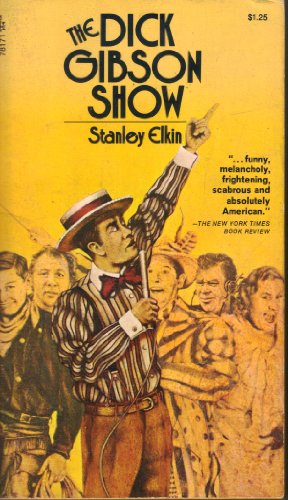
My stack of library books depleted, I recently combed our overflowing shelves for something to read during these long housebound days. A dusty paperback from 1972 caught my eye: The Dick Gibson Show by Stanley Elkin. The author was a well-regarded dispenser of serious literary fiction in the era of John Updike and Saul Bellow. In the 21st Century, that translates as another long-winded white guy — guilty as charged.
Nevertheless Dick Gibson hooked me after a few pages, and held on right up to the end. Short on plot, this story of an itinerant DJ in post-World War II America is discursive on purpose. The Dick Gibson Show goes long and deep on dialogue, monologue, spiel, invective, improbable yarn-spinning and tall tale telling. It’s a operatic deluge of bullshit, a hymn to the human voice and its hypnotic prowess. Of course there are premonitions of the Internet in this cavalcade of craziness: the opinions, fantasies and delusions of radio hosts and listeners alike, broadcast far and wide from mighty mega-watt towers.
But Dick Gibson (“alias Marshall Maine, Tex Elllery and a dozen others”) is more curio than oracle. The Dick Gibson Show is a remnant, a reminder if you’re old enough, of a transitional period in mass media. When the Fairness Doctrine was rescinded in 1987, the talk radio format transformed into the pointedly political, and mostly conservative platform of Rush Limbaugh and disciples. Before that upheaval, however, the AM dial was a twisty two-way street, an on-air phone conversation between quirky hosts and even stranger callers. Late at night, especially, you could almost say anything. Or nothing.
A digital clock radio was my bedside companion through adolescence. Exclusively tuned to FM in the Seventies, it functioned as a supplementary music-delivery system until I moved to New York City in 1981. Exactly how or why I first pushed the AM button is a mystery; perhaps as I became a music writer, spending my days reviewing records and preparing for interviews, talk radio presented an alternative — an escape hatch. Sure I’d watch TV before turning in; I revelled in the vintage B-movies and The Mary Tyler Moore Show reruns. But all too often, after the lights went out, my brain remained on.
Eventually, nearly inevitably, late-night talk radio lulled me to sleep. It was a perfect palliative for my frequent bouts of insomnia.
WMCA was a Top 40 beacon in New York during the Beatlemaniac Sixties, famed for its clean-cut platter-spinning DJs, The Good Guys. But by decade’s end, FM rocked the airwaves with album cuts and countercultural hosts. So in 1970, WMCA switched to an all-talk format that soon became the industry standard for AM stations around the country. Because it was the first clear station on the dial at 55, I latched onto WMCA and became a loyal listener.
It should come as no surprise that Larry King, the wooden interviewer who inexplicably became a cable TV staple in the Nineties, was first a talk radio god, widely heard in syndication, as was the earnest daytime-TV host Sally Jesse Raphael. But my main man on WMCA was local, a transplanted Southerner and political conservative named Barry Farber. Honestly, I remember little or nothing of the actual content of those nocturnal gabfests (which testifies to their efficiency as sleep aids). What sticks in my ear over the decades is the rough yet honeyed tone of Barry Farber’s voice, his mild Carolinian accent and skeptical-yet-respectful interviewing style. He didn’t argue, shout, badger or bray at his guests, and he kept callers on the leash.
In that regard, Barry Farber’s on-air shtick was a far cry from Dick Gibson’s various personas let alone Rush Limbaugh. And the roots of what talk radio became could be heard in the Eighties on WABC in New York loud and clear, every afternoon, where Bob Grant pushed the envelope with racial invective and politicized misanthropy. The fictional centerpiece of The Dick Gibson Show is a live-mic multi-guest program that devolves into a round-robin mental meltdown. If this extended scene strains credibility about what was permitted on the radio in 1971, then it surely resembles a bad day on Twitter. Minus the gun.
Bottlemania: How Water Went On Sale And Why We Bought It (Bloomsbury 2008) by Elizabeth Royte.
(Originally appeared in The Los Angeles Times Book Review June 1, 2008)
In 2006, Americans consumed, per capita, more than 25 gallons of bottled water — twice as much as in 1997 and almost five times as much as in 1987. And what ignites Elizabeth Royte’s reportorial spark in “Bottlemania” — at least initially — is the ecological cost of all those plastic empties: We discard between 30 billion and 40 billion bottles of Poland Spring, the most popular brand, in a year.
Like her previous book, “Garbage Land: On the Secret Trail of Trash,” this tautly paced volume more closely resembles a travel narrative than a tree-hugging jeremiad. Royte doesn’t traffic in platitudes, moral certainties or oversimplification; she’s unafraid of ambiguity. Seamlessly blending scientific explanation and social observation, she pursues the course of Poland Spring back to its source in Fryeburg, Maine.
“Fryeburg is tied up in fits,” she writes. “Its abundance of fine water has cast its unwitting residents into the middle of a social, economic, and environmental drama.” Her mordant wit comes in handy: “It’s easier to picture kids guzzling beer out here than deer nuzzling around mossy springs,” she notes. “But Fryeburg, for all its out-of-season torpor, once bustled with economic activity: sawmills and timber operations, a shoe manufacturing plant, a couple of machine shops, corn shops, and dozens of thriving dairy farms. Now, it has the water-extraction business, which contributes nothing to the town’s long-term economic welfare.”
What drives this obsessive thirst — this compulsion to pay for something we can essentially get for free? Royte characterizes the nationwide craving for bottled water, “in a country where more than 89 percent of tap water meets or exceeds federal health and safety regulations,” as both an outrageous marketing coup and an unparalleled social phenomenon. Beginning in the late 1970s with Orson Welles’ high-toned television pitches for Perrier, bottled water has been promoted for its snob appeal as much as its health benefits. Jennifer Aniston’s recent spots for Smartwater strike Royte as typically absurd. “Some ads depict her naked and others place her, clad, in an elegant restaurant, where her plastic water bottle looks, to someone with my peculiar mindset, like litter amid the crystal stemware.”
Royte’s “peculiar mindset” is that of an unabashed tap-water enthusiast who savors the irony that “purified” water from municipal sources — Dasani and Aquafina, as opposed to bottled spring water or mineral water, like Perrier — accounts for 44% of U.S. bottled-water sales. If her personal disavowal of bottled water borders on the puritanical, it also comes across as pragmatic: “Foie gras tastes better than chopped liver. That doesn’t mean I’m going to buy it. I don’t need to spoil myself. I don’t want to get used to expensive things . . . that might . . . disrupt the social and environmental order.”
Like any good travel writer, Royte possesses an intellectual curiosity that continually lures her off the beaten path. The second half of “Bottlemania” takes a sharp turn, upending many of the author’s previous assumptions about tap water.
“I decide to visit Kansas City,” she writes, “where the public utility sucks from the Missouri River something that resembles chocolate Yoo-Hoo and turns it into water so good that national magazines shower it with awards and even the locals buy it in bottles.” All along the Missouri and the Mississippi, cities drink from and discharge into the same river. Visiting a municipal water-treatment plant, Royte is alternately impressed and appalled: “[T]he filtering process mimics, in a supercondensed time frame, the purifying processes of nature. It’s the same ecosystem service provided for free in such places as Fryeburg, Maine, by glacier-made beds of sand and gravel.”
Royte knows when not to intrude, when to let a devastating quote or damning exchange stand on its own:
“What do you do with the atrazine [an herbicide] once you filter it out?”
“We put it back in the river.”
It seems that because of oil spills, industrial discharges, agricultural runoff, animal waste and sewage (both treated and raw), tap water is far from risk-free. Suddenly, the stainless-steel extraction pipes of Poland Spring don’t seem quite so redundant, and Royte admits that after her tap-water investigations, “I’m not immune to the appeal of springwater.” Yet the conclusion of “Bottlemania” is more thoughtful than despairing, even though much of what we’ve learned isn’t comforting. If our future really does include drinking reclaimed or “repurified” wastewater, Royte is willing to hold her nose and remain philosophical. “As bad as toilet-to-tap sounds,” she concludes, “I have to remind myself: all water is recycled.”
My first job search in New York City resulted in a surprise lie detector test
Desperation inspired me to answer a generic calling-all-college-grads type of ad, for a “junior management position in retail.” Since I’d worked for two years at a record store while obtaining my useless social science degree, for the first time in my post-college job quest I felt fully qualified.
This “unique opportunity” turned out to be a training program for branch managers at the newly christened and franchised American Savings Bank. Visualizing myself behind a desk, I imagined eight-hour days spent filling out forms while wearing the drab navy blue Brooks Brothers suit that my dad predicted I’d need to own. Pondering further, I decided that my proud status as a bohemian who didn’t care about money might just work in my favor. I could be trusted around large amounts of cash. And on a purely pragmatic level, I realized (or rationalized) working at a bank would be a steady job if nothing else. I was determined to gain a foothold in New York City.
The initial interview transpired in the back office of a mint-condition Midtown branch; the Grand Opening was weeks away. Thin carpets, brittle furniture and the thick scent of disinfectant filled the empty rooms. A stone-faced female interviewer, possibly not long out of college herself, questioned me by rote across an uncluttered desk. Perusing my resume, she expressed deep skepticism non-verbally, never directly asking why in the world I was applying for a banking position. I stressed my “extensive” retail experience and (mostly untested) people-management skills. Declaring my willingness to accept a spot at any branch that was reachable by subway cracked her stern demeanor. Hey, I meant what I said. Even if it meant commuting an hour each way to Jamaica, Queens where my great aunt lived during the Sixties. It was still New York City.
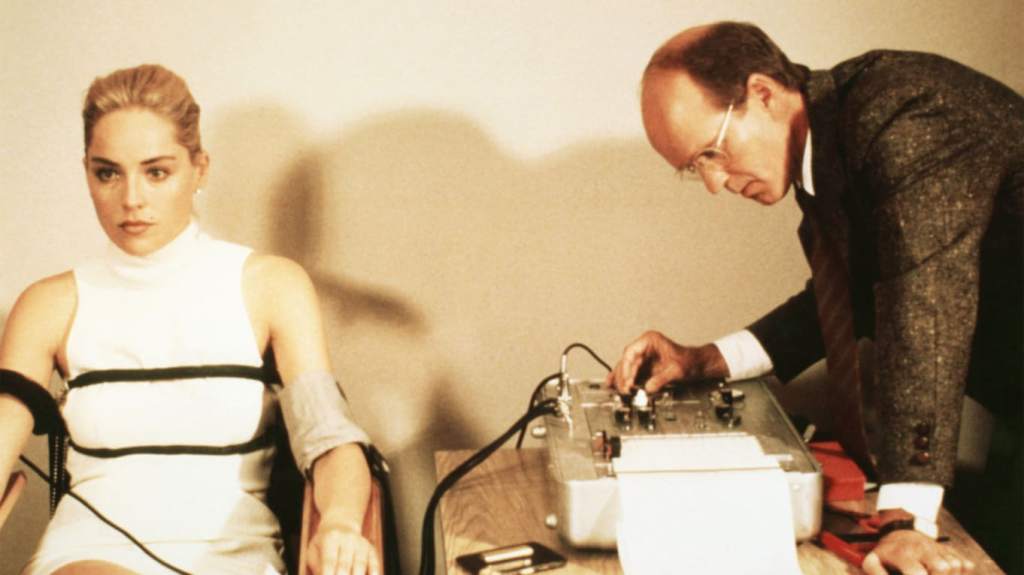
The bank called back on the same day as my interview. Turned out there was a slight catch; a preliminary step was required before I could meet with the program director for branch managers. Every potential employee of the American Savings Bank, unsurprisingly when I thought about it, was required by law to undergo a polygraph examination. Conveniently, I was able to schedule a lie detector test for the next day.
Nervously, I managed to board a train headed downtown. Surfacing near City Hall, I proceeded away from the Brooklyn Bridge and toward the monumental court buildings. Immediately I was lost, wandering on an anonymous side street. Just before panic set in, I spotted the Chambers Street sign at the other end of the block.
Walking the gauntlet of men (and a few women) in near-identical suits, I edged my way into the lobby of an aged office building. A noisy elevator ejected me into the waiting room of (let’s call it) Wall Street Security Inc. A paunchy middle-aged man with the Irish-American complexion familiar from my father’s side of the family – freckles and blondish red hair – stood up from behind a desk and abruptly stated my name as a question. “Mark Coleman?” Before I replied “yes” he turned away and started walking down the hall, assuming I’d tag along.
We wound up in a windowless room: unadorned brown walls, off-white acoustic tiles barely clinging to the ceiling. A deep silver metal suitcase lay open on a battered wooden desk. Without speaking, my nameless escort curtly nodded toward the two chairs facing the suitcase. My seat was the one that resembled the electric chair in a low-budget prison movie.
A cushion shaped like a toilet seat rested where I was meant to deposit my butt. Dangling from the chair’s arms and back were white straps that resembled bandages with wires attached. Settling in, I flashed back to an underground newspaper article from ten years before, when I was 13 and a wannabe hippie. The title was How To Scam The Man’s Lie Detector or something similar, anyway the specific tactic that came to mind here in 1981 was “tighten the muscles in your ass.” Sadly, the slack little pillow under me rendered this impossible – yes, I tried. My interlocutor had settled into his chair and revved up the polygraph. Inside the silver suitcase was a worn console with dials, buttons and switches. On one side of the console sat a series of jacks with rubber tubing and wires attached; on top were needles poised to hop and skip across a looped roll of paper. He strapped a sort of straight-jacket across my midriff, and then fastened thin sensors the size of band-aids around the ring and index fingers of my right hand. An armband-sensor gripped my left bicep.
In ten minutes we covered a mix of neutral queries culled from my resume, alternated with more pointed inquiries relating to theft and deceit. Replying was a breeze: aside from the rare five-dollar discrepancy in the cash register balance back at Discount Records, my record in regards to handling money was spotless. No, the inevitable questions about illegal drug use are what put me on edge. Thinking fast on my feet, well on my seat to be literal about it, I decided to come clean on marijuana, guessing that a) weed was viewed as relatively benign (though illegal at this point in history) and b) if the polygraph worked at all any equivocation on my part would set the damn thing off like a smoke alarm. Since my limbs were so tightly bound, I mentally crossed my fingers and hoped for the best.
Remaining expressionless the entire time, my interrogator didn’t mention results when we finished. “The readout goes back to the bank and they’ll be in touch.” Unsure about how to conclude our encounter, on the way out I said “thanks” which seemed to catch him off guard as, for the first time, he displayed a reaction approaching human emotion: his raised eyebrows said c’mon pal ya gotta be kidding me.
Either inhaling occasionally didn’t matter, or the American Savings Bank was desperate for warm bodies. I was offered the job two days later.
*
Women with the most exotic New York accents imaginable staffed the receptionist’s desk at every place of business I entered during my virgin job search. Or so it seemed to my Midwestern ears. Right after accepting the training position at American Savings Bank, maybe a week into my odyssey, I belatedly checked in at the editorial offices of Sugar y Azucar magazine. Or in the words of the elaborately coiffed and manicured young woman who greeted me, “Shuga Ezookuh.” This was not a nutritional handbook, but a trade journal for manufacturers of refined sugar and suppliers such as my father’s employer, Western States Machine Company. In fact, my dad enjoyed a warm long-distance friendship with Sugar y Azucar publisher Richard Slimermeyer; they often met up at industry events once or twice a year, with their wives in tow, and had visited each other’s homes in Cincinnati and New Jersey.
Ushering me into his midtown Manhattan office, Dick emitted flushed-face warmth and aromatic joviality. The aftermath of a two-martini lunch, I presumed. After apologizing for not having an entry-level position to offer, he launched a rambling monologue about trade-magazine publishing and how the best thing about it was “doing business with a stand-up guy like your dad.” It almost felt like he was trying to get me to buy an ad.
The meeting was over in twenty minutes, short and ahem, sweet. Hanging around the office after we were finished, I was flummoxed by the minimalist layout: three adjacent cubicles where the editors labored, a separate room for the two-person art department, a tiny library in a converted closet, and Dick’s corner office. The atmosphere was quiet, almost hushed: not exactly a hectic newsroom. An attempt at conversing with the frosted-blonde receptionist quickly declined from polite to pointless. Rescue came when Barbara, the svelte middle-aged woman who’d been introduced as Senior Editor of Sugar y Azucar, called me over to her executive cubbyhole. She spoke in a mid-Atlantic accent and her subdued sense of style stood in stark contrast to the receptionist. Barbara exuded a breath of worldliness decidedly at odds with our surroundings.
“Mark, hold on a minute before you leave. Let me put you in touch with Luther Miller, my old boss at Railway Age. When I heard you talking to Dick just now, I remembered that Luther recently mentioned that Railway Age needs an associate editor. Reporting on the railroad business might not be what you’ve set out to do but you won’t find a better editor than Luther – he’s an old newspaper man, a real pro, better known these days as the Dean of Railroad Journalists. He taught me everything I know.”
At this point her current employer broadcast a suggestive chuckle, only to be silenced by a sharp glance.
“Simmons and Boardman, the company that owns Railway Age, has been around forever,” she continued. “Railway Age is the oldest trade magazine in the country – since 1876! Honestly, the company needs some new blood. Almost everybody who works there is pushing retirement age. If you don’t mind, I’ll also put in a call to Bob Lewis, the publisher. In the meantime you can drop off your resume for Luther. Here’s the address.”
If I didn’t mind! As I prostrated myself in thanks, Barbara waved me away while Dick fixed me with an inscrutable look and laughed. “We certainly can’t have YOU working in a bank.” I took it as a compliment.
From my self-serving perspective, if Western States Machine Company wound up springing for an extra ad page as a quid pro quo for Dick’s effortless intervention on my behalf, it would be money well spent.
Barbara’s recommendation was all that Railway Age required. Or else Simmons-Boardman Publishing Co. was desperate for warm bodies too. Anyway, two days later, my interview with the brusque and obviously preoccupied editor-in-chief Luther Miller shot by in a perfunctory blur. I accepted the job on the spot, for $13,500 annually, in a dream of disbelief or perhaps a mild state of shock. My follow-up phone call to the American Savings Bank was awkward, though mercifully brief. With a few days left at the Chemist Club, I found a job in something resembling journalism! Now all I needed to find was a roof over my head.



 Mark Coleman